
Capryl Monoglyceride: The "Invisible Guardian" for Food Preservation and Texture Enhancement

Sep 17,2025

In the food industry's pursuit of the dual goals of safety and quality, capryl monoglyceride, as a highly effective and multi-functional food additive, has become an indispensable part of modern food engineering. This pale yellow transparent liquid, odorless and with a slight coconut aroma, plays a low-key role in three aspects—preservation, emulsification, and stabilization—in foods such as bean pastes, pastries, and meat products.

I. Why Choose Capryl Monoglyceride: Scientific Properties and Application Advantages

The core value of capryl monoglyceride lies in its "broad-spectrum antibacterial" and "dual-function" characteristics:


  • Unrestricted High-Efficiency Preservation: It can effectively inhibit Gram-positive/negative bacteria, molds, and yeasts. Japan has classified it as a "preservative with unlimited usage" since the 1980s, and the Joint FAO/WHO Expert Committee on Food Additives (JECFA) has not set an Acceptable Daily Intake (ADI) limit for it.
  • Dual Effects of Emulsification and Stabilization: As a lipophilic non-ionic emulsifier (with an HLB value of 5.2), it can not only prevent oil-water separation but also enhance the anti-aging property of starch. It performs particularly well in foods containing oils, pigments, or flavors.
  • Peace of Mind with Compliant Usage: According to the national standard GB 2760-2024, its applicable scope and dosage are clearly controlled:

Pastries and flour-based products (noodles, mooncakes, cakes, etc.): ≤1.0 g/kg

Meat sausage products (sausages, ham sausages, etc.): ≤0.5 g/kg

Bean pastes: ≤1.0 g/kg

II. Practical Applications of Capryl Monoglyceride in the Food Industry
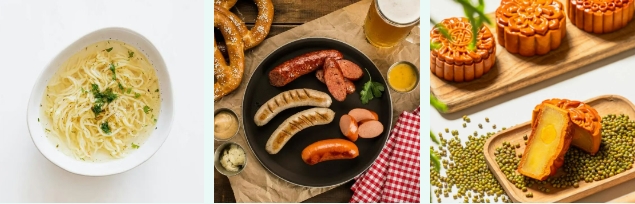
1. Pioneer in Anti-Aging of Rice and Flour Products

Adding 0.5–1.0 g/kg of capryl monoglyceride to fresh wet noodle products can significantly delay starch retrogradation, making noodles more resistant to boiling and dumpling wrappers more flexible. When used in pastries, it can lock in moisture, prevent hardening, and extend the shelf life to more than 30 days.

2. "Preservation Guardian" for Meat Products

Adding 0.5 g/kg to meat sausages can inhibit lactobacilli and molds, increasing the shelf life by 40% in high-temperature and high-humidity environments. At the same time, it promotes fat emulsification, improving slicing performance and taste.

3. Stabilizing Agent for Fillings

In bean pastes, it prevents oil separation and imparts a delicate and smooth texture.

III. Professional Support: Innovative Practices of Kevin Group

On the path of quality upgrading of additives such as capryl monoglyceride, Kevin Group has become an industry benchmark with 20 years of technical accumulation, establishing a complete system covering R&D, production, and application.
 
Kevin Group produces high-quality capryl monoglyceride in-house. Its products undergo triple quality control—from "raw materials to process to finished products"—to ensure full compliance in terms of preservative efficacy and emulsification stability.

IV. Future Outlook: Dual-Track Development of Safety and Innovation

As consumers' demand for "clean labels" and healthy foods grows, capryl monoglyceride, with its natural origin (a derivative of coconut oil) and metabolic safety, has become an ideal alternative to chemical preservatives such as sodium benzoate.


"The value of scientific additives lies in invisible protection and visible improvement." In Kevin Group's practical philosophy, safety and efficacy have never been an either-or choice. From the moisture retention and preservation of mooncake fillings to the texture enhancement and shelf-life extension of sausage products, capryl monoglyceride is reshaping the preservation logic of the food industry with its "low dosage and high efficiency" characteristics. With large-scale production and rigorous quality control, Kevin Group enables this ingredient to strike a balance between safety and functionality—innovation in future food will always start with respect for every gram of additive.